

What Is Consciousness? A True Answer
“When you change the way you look at things, the things you look at change.”― Max Planck, German physicist and winner of the 1918 Noble Prize in Physics on consciousness

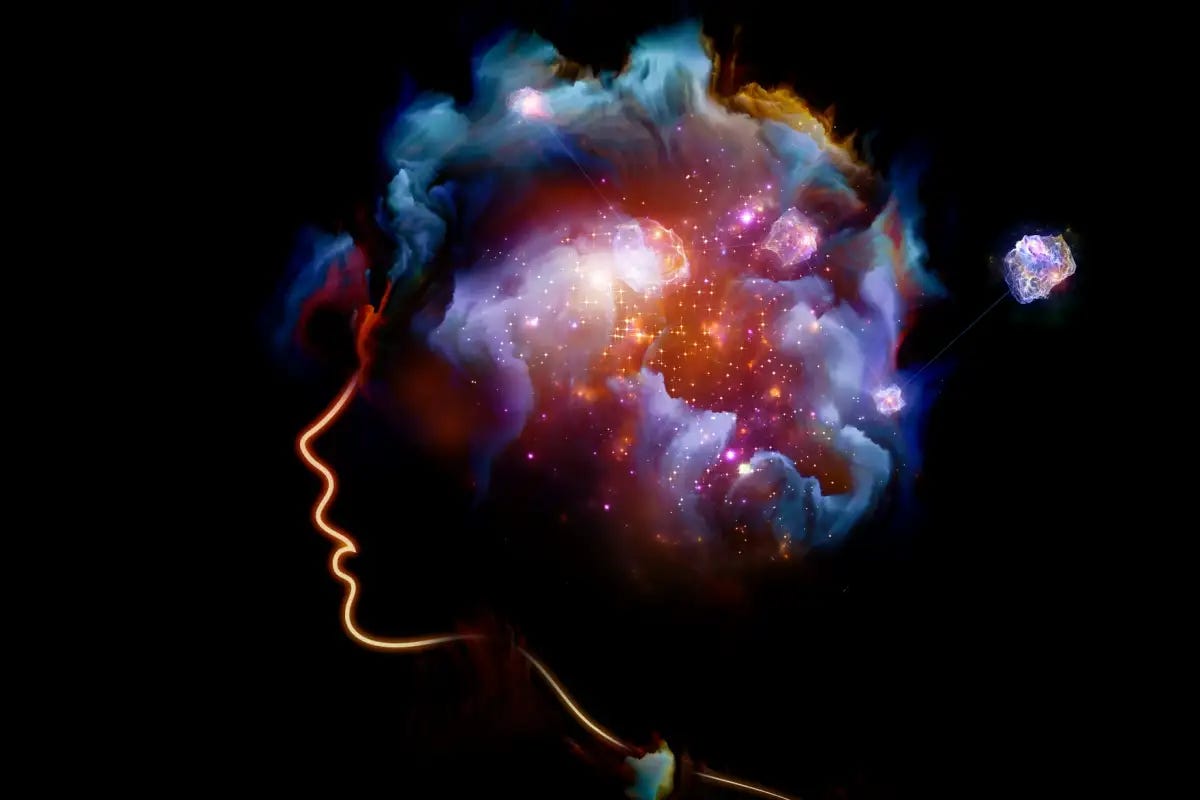
Consciousness is the state of being aware of ourselves and the world around us, including our own thoughts, feelings, and sensations. Consciousness is that state of awareness in which we perceive our own life as happening.
The definition of consciousness varies. It depends on who we ask, and it’s a really hard concept to define, if definable at all. Consciousness is a capacity somewhere in or outside of our body.
Scientists at the moment can’t really tell where consciousness is located but it’s a growing field.
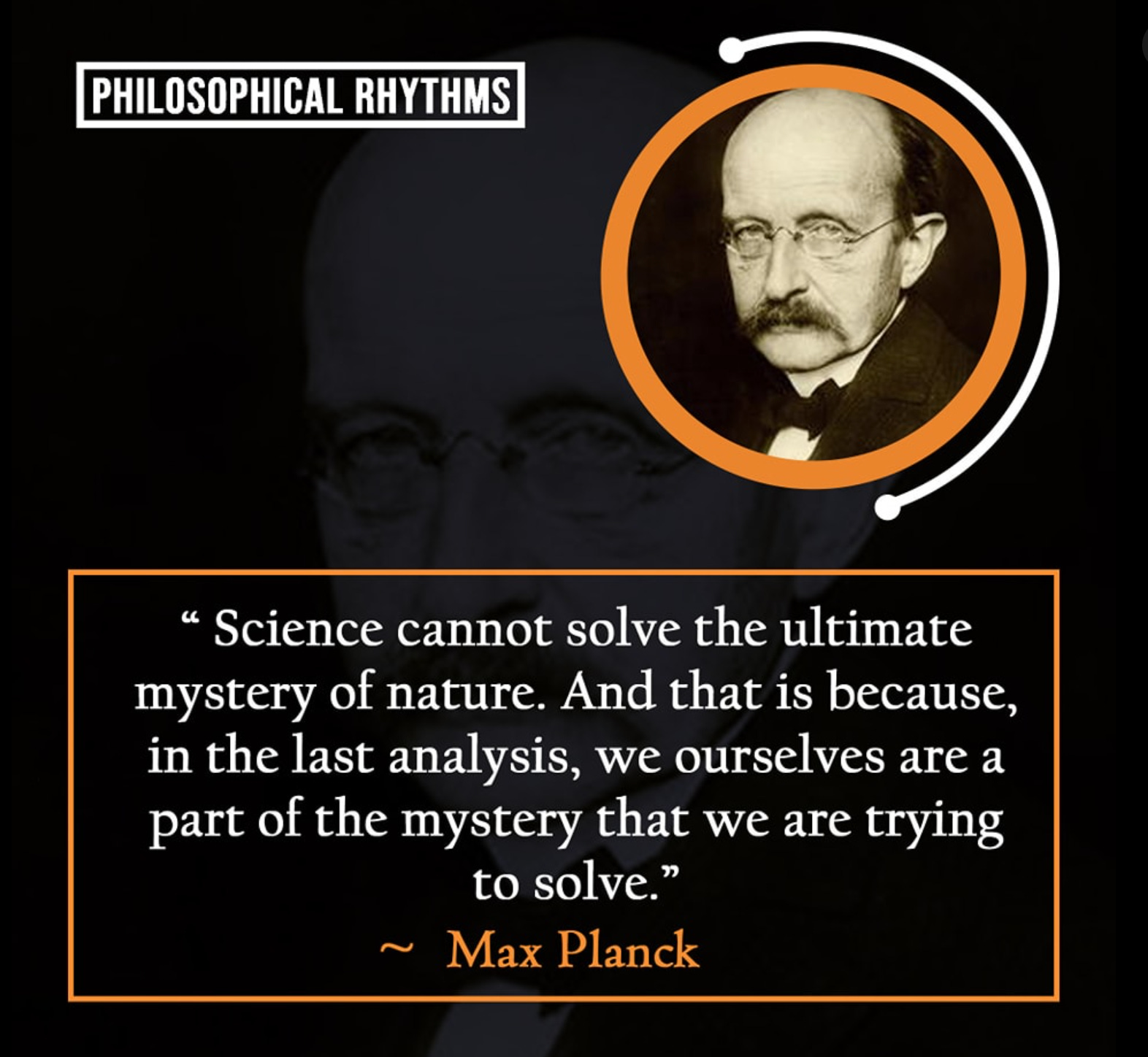
Consciousness might not even be a singular entity. It could also be the interplay of several life systems as the neuroscientist Jacobo Grinberg purports.
René Descartes’ rudimentary dictum “cogito ergo sum,” meaning “I think therefore I am” is a starting point. It sounds a little basic hundreds of years later, but it’s still a useful way to begin to understand consciousness.
There’s also qualitative aspect to our conscious awareness. This means that the type of thoughts and emotions, or lack thereof add particular a flavor to our state of awareness. We can choose our feelings, emotions, and sensations purposefully to enhance the quality of our awareness.
I mention lack thereof because in meditation, we practice to clear, silence, and experience an uninterrupted space of peace. Silence is also a player in the quality of our conscious state - it’s actually one of my favorites because it makes it easier to hear the quality of the rest.
